
I love Madrid. I always have. Madrid to me is like New York is to Carrie Bradshaw. Sometimes I just like to wander the avenues and visit museums, stop off at a bar for a coffee or a Vichy Catalan. When I first visited Madrid it was a few years after the first AVE was built and I took it to Toledo. Later when I was just out of college I lived in Madrid and traveled around the city by metro and on foot. Later, in my 30s I traveled by bus and discovered the wonders of the public transport system in the city. With just a bus pass you could go anywhere and with free wifi. It was pretty fantastic how easy and comfortable it was to move around the city. For this reason, I found the results of last week’s election in Madrid troubling, because the party that won campaigned to decrease taxes and eliminate some taxes altogether.

I fully admit that the election was a lot more complicated and voters had more issues than just taxes in mind when they cast their ballots. This isn’t really a commentary on the election in Madrid but on the paradoxical strategies of city governments over the last few years to promise smarter cities and lower taxes. Public finance relies pretty heavily on taxes because for cities to be smart, they need citizen data and citizen data is most efficiently collected through public goods. It’s great for cities to have strong private partners to provide services on behalf of the government but then it is the government’s job to regulate and often fund the service infrastructure. In many cases, such as in 5G and major transport infrastructure development, the cost is so high that the public sector is the only possible source of financing and that financing comes from tax revenue. Of course the trade off is that these public goods must be accessible to all and that the data produced from those goods serve to enable the constant fine-tuning of the services themselves.
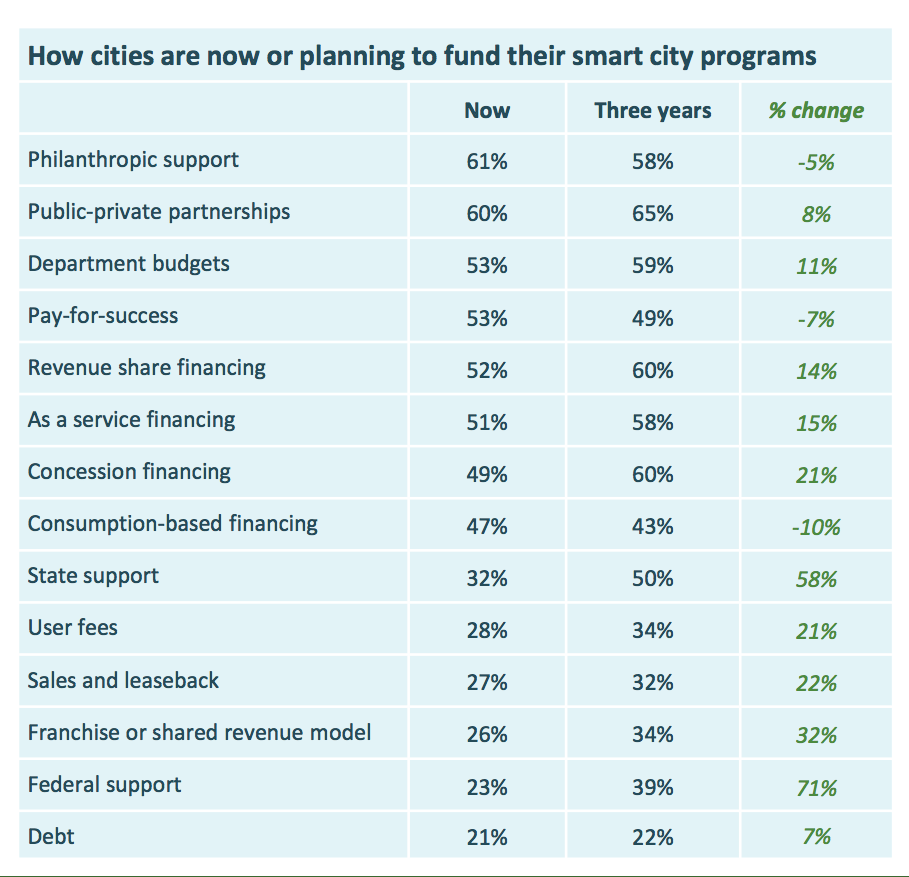
Smart City development is directly related to public finance. City and regional governments have to have revenue to build smart infrastructure. Smart infrastructure will enable a wide variety of innovation and development as well as, through the use of data, bring transparency to the governing process. There is a huge potential for decreasing the need for public investment over time but in this initial stage, the investment is significant, especially if the need for smart infrastructure has been ignored for some time. Keeping city and regional budgets balanced is always tricky and people are not keen to pay taxes ever but the future depends on smart infrastructure and the government’s ability to efficiently manage the city. It is not time to decrease tax revenue, it is time to use it to bring greater transparency to the government process.
 smartcityperspectives.com