
We spend hours talking about digital services and digital transformation. It is the core of our smart city policies. Everything is connected and for maximum ease-of-use, we need connectivity and standardization across platforms. The smart city community talks at length about digital inclusion, especially with the aging population. We go to great lengths to build tools so that the less digitally inclined can take advantage of smart tools. What we don’t talk enough about are the people who no longer trust the institutions at the core of smart city development.
I recently learned that over 7 million households in the United States are “unbanked“, meaning that they don’t have a bank account or credit card. The number jumps to 63 million adults when you add the underbanked, a group that has a bank account but depends on alternative financial services such as payday loans and pawn shop loans. I was blown away that the number is that high. First of all, I think it is important to note that almost all of the unbanked are low income families that have lost faith in the banking industry because of progressively high minimum balances and high fees since the Savings and Loan Crisis in 1980s. Many had bank accounts but gave them up because the service was costing them too much money. Now they operate on a cash basis and use services like western union and money orders for services that are difficult to pay for with cash. The unbanked have essentially been shut out of the financial services community and this has caused a ripple effect of complications for other parts of their lives. The cost of being unbanked is well documented and it is certainly an area of concern for cities looking to implement innovative public services such as smart transport cards and cashless payments.
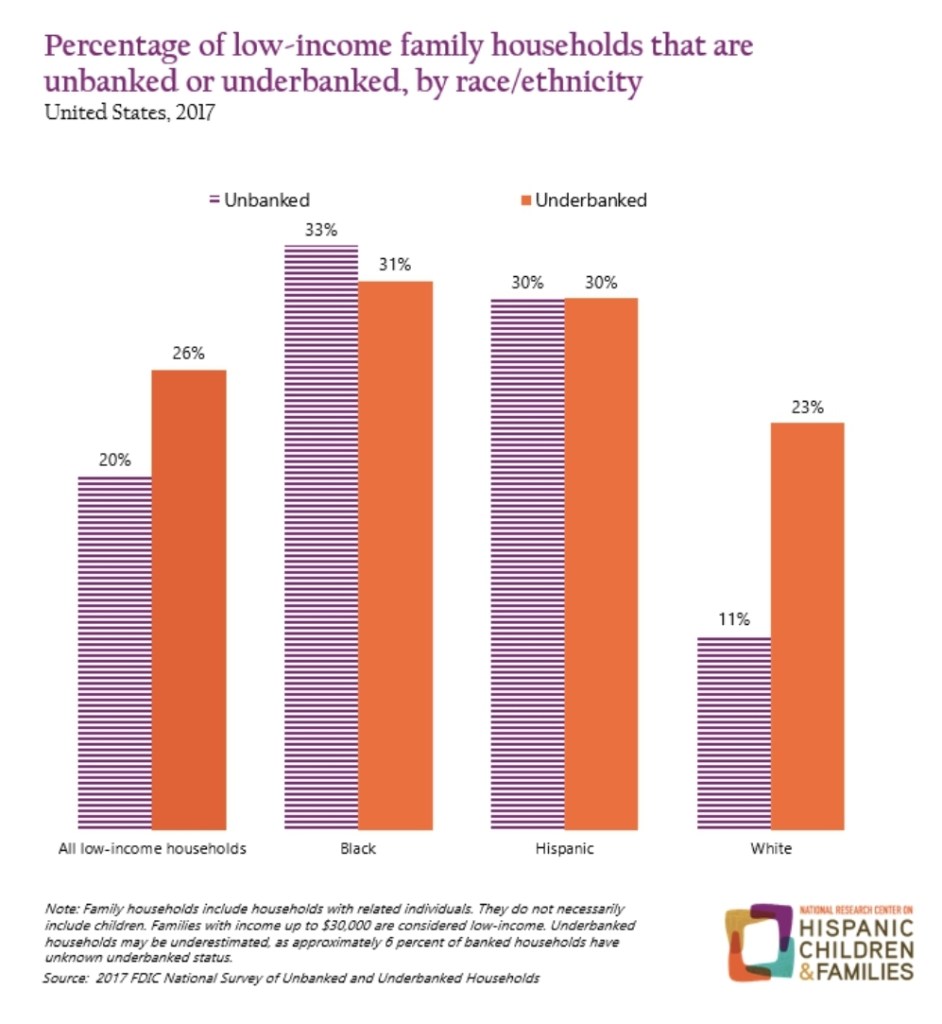
So how do we incorporate the unbanked as well as the digitally-challenged into our smart city plans? There is no easy answer to this question and the solutions are likely very linked to local culture so there is no one-size-fits-all answer but there are a few things that can be done to start to tackle the problem:
1. Recognize the problem and make accommodations. Many of the unbanked lost trust in the banking system because it ceased to work for them, cities have the obligation to understand what happened in their city and how the unbanked population is managing without the use of a basic element of modern life. This insight can lead not only to making sure we are not making life harder for some segments of the population in the name of innovation but it might even resolve some of their issues and spur further innovation.
2. Enforce and strengthen the regulatory role of government in public-private partnerships. Public-private partnerships (PPPs) are an effective and essential tool for developing innovative public sector solutions, I am definitely not arguing against PPPs. But it is absolutely essential that the public sector maintain a regulatory role in the development and implementation of new technology. The reason for this is that to truly develop solutions that work for all segments of the population, we need oversight that will look beyond the bottom line. It is the lack of regulation in the financial services industry that created this problem in the first place and it is the government’s obligation to correct it.
3. Look to the Fintech sector. I know I just made a point that private companies are going to do what they are set up to do – make money. This is very true of Fintech companies but my experience with Fintechs is that most of them have seen the financial services sector and said to themselves, “we can do better”. I have encountered quite a few that, even though they are for-profit companies, are looking to build a more inclusive offering of financial products and I am certain that there are many who would be interested in creating solutions for the unbanked and underbanked.
All in all, a smart city is not only one that uses technology to create greater efficiency for its people but also one that works for everyone. Smart cities must be inclusive cities and when we work towards that goal, the entire society will profit in the end.
 smartcityperspectives.com